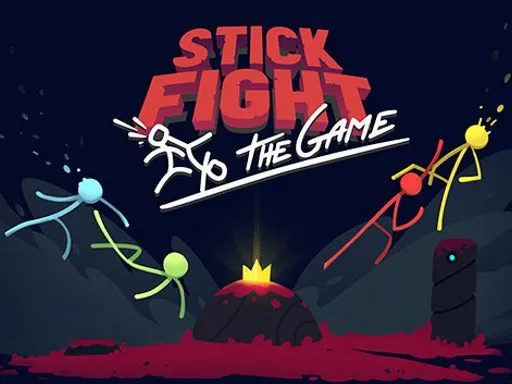
Stick Fight


Rating:
4.43
Played:
14,427
Stick Fight works because it never spends long explaining itself. A round begins, a few weapons appear, somebody gets launched across the stage, and everyone immediately understands the stakes. That speed is a huge part of the appeal. The game takes the familiar look of internet stick figures and turns it into a compact arena brawler where timing, positioning, and a little nerve matter more than complicated systems.
If you open Stick Fight in a browser, the first thing you notice is how quickly it gets to the action. You are not managing inventory, leveling a character, or reading long tutorials. You enter a small map, react to the weapon that spawns, and try to be the last fighter standing. That simple loop makes the game easy to enter, but the physics keep it interesting because every jump, recoil burst, and awkward landing can change the round.
Why Every Round Feels Alive
At its core, Stick Fight is a physics-based fighting game. Characters move with a little wobble, weapons kick hard, and the stage is never just a background. Platforms shift, edges punish hesitation, and explosive tools can remove half the arena's safe space in a moment. The result is a game where winning is not only about landing hits. It is also about reading momentum and knowing when chaos is about to help you or punish you.
The original commercial release became popular because it was built for short multiplayer matches that produce instant stories. According to the Steam listing, Stick Fight: The Game launched on September 28, 2017 from Landfall West and focused on two to four players, physics-based combat, interactive levels, and a huge variety of weapons. That background still shows in browser play through quick rounds and knockback-heavy combat.
Simple rules, tricky outcomes
New players usually understand the objective within seconds. Stay on the map, grab a weapon if it helps, and remove the opponent before they remove you. The tricky part is that Stick Fight rarely rewards panic. A careless jump near an edge is often worse than standing still for half a second. A rocket fired from the wrong angle can throw you backward. A desperate chase for a weapon can leave you in a terrible position. That is why the game feels deeper than its art style suggests.
Browser Play Is Best When You Start Clean
One reason browser players stick with Stick Fight is convenience. You can launch a match without committing to a long session, which makes it perfect for a quick break. It also means your setup habits matter. Click into the game window before the round starts so your inputs are captured properly, switch to fullscreen if you want clearer spacing near the edges, and close heavy tabs if the action starts to feel delayed.
Browser builds can differ from the original PC and console versions, so it is smart to treat the first round as a calibration round. Use that minute to test jump timing and aiming, then settle into the same winning habits: balanced movement, awareness of the map, and enough patience to avoid launching yourself into danger.
Classic controls and what they teach you
Landfall's FAQ for the original keyboard controls lists WASD for moving and jumping, left click for punching or shooting, right click for blocking, and F for throwing weapons. Many browser builds stay close to that layout, though some adjust keys or streamline actions. The exact buttons matter less than the roles behind them. You need one set of movement inputs you trust, one fast attack action, and one quick answer when a weapon becomes more dangerous in your hands than in your opponent's.
That control model teaches a useful lesson. Movement is not separate from combat in Stick Fight. Your jump changes your aim line. Your recoil changes your recovery path. Your block only matters if your feet are in a safe place when the exchange ends. Once you understand that, you stop treating the game like a simple button-masher and start treating every action as both offense and positioning.
Winning More Rounds Comes Down to Space
The fastest way to improve is to stop chasing every fight. Good players in Stick Fight protect space first. The center of the map usually gives you more recovery options, while the edges remove your margin for error. If you hold the middle, opponents often have to jump toward you, reach past you for a weapon, or gamble on a messy exchange. That is exactly where mistakes happen.
Weapon choice matters too, but not in the way beginners expect. There is no universal best weapon because map shape and distance change everything. Fast guns reward calm aim. Heavy weapons reward timing. Explosives are strongest when the enemy has nowhere safe to land. If you grab something powerful, do not fire instantly just because you can. Wait for a stable angle, especially if the recoil can send you backward.
Use the arena as part of the weapon
Stick Fight becomes much more manageable when you stop thinking in terms of pure damage. A small shove at the right time can be better than a perfect combo. If an opponent is already sliding toward an edge, pressure matters more than style. If a platform is narrow, even blocking can become a trap because the next impact may push the defender off balance. The arena is always helping someone. Strong players notice who that someone is before the exchange begins.
Another common improvement is learning when not to jump. Panic jumps feel natural because the game is hectic, but they often hand your landing spot to the other player. Stay grounded when you can, hop only for a reason, and remember that a late throw can end a round just as cleanly as a direct shot.
From Flash-Era Stick Figures to a Modern Party Fighter
Stick figure action has been part of internet culture for a long time because the format is easy to read and naturally funny when motion gets exaggerated. Stick Fight takes that old visual language and ties it to modern physics, interactive maps, and social multiplayer energy. The Steam page highlights one hundred highly interactive levels, a level editor, and a huge library of community-created stages, which helps explain why the full game built such a loyal audience.
FAQ
Is Stick Fight hard to learn?
No. The goal is clear, and most players understand the basics after one or two rounds. The harder part is learning how physics, recoil, and edge control affect each exchange.
Can I enjoy Stick Fight in short sessions?
Yes. That is one of its best qualities. Rounds are quick, losses are easy to reset from, and the game works well when you only have a few minutes.
Why do I keep knocking myself off the stage?
This usually comes from firing strong weapons at bad angles, jumping too often near the edge, or chasing an opponent farther than the map safely allows. Slowing down for a second often fixes it.
Does Stick Fight have a single-player mode?
The original game was built around multiplayer, and Landfall's FAQ says there is no single-player mode or bots there. Some browser versions may present the action a little differently, so check the menu of the build you are using.
What should I focus on first if I want to improve?
Start with spacing. Try to hold safer ground, jump less, and pay attention to where recoil will send you. Those habits help more than memorizing one favorite weapon.
Are the controls always the same in every version?
Not always. Many versions stay close to the classic keyboard layout, but browser adaptations can change details. It is worth checking the controls screen or testing a quick round before you take the match seriously.
Comments
Loading comments…